

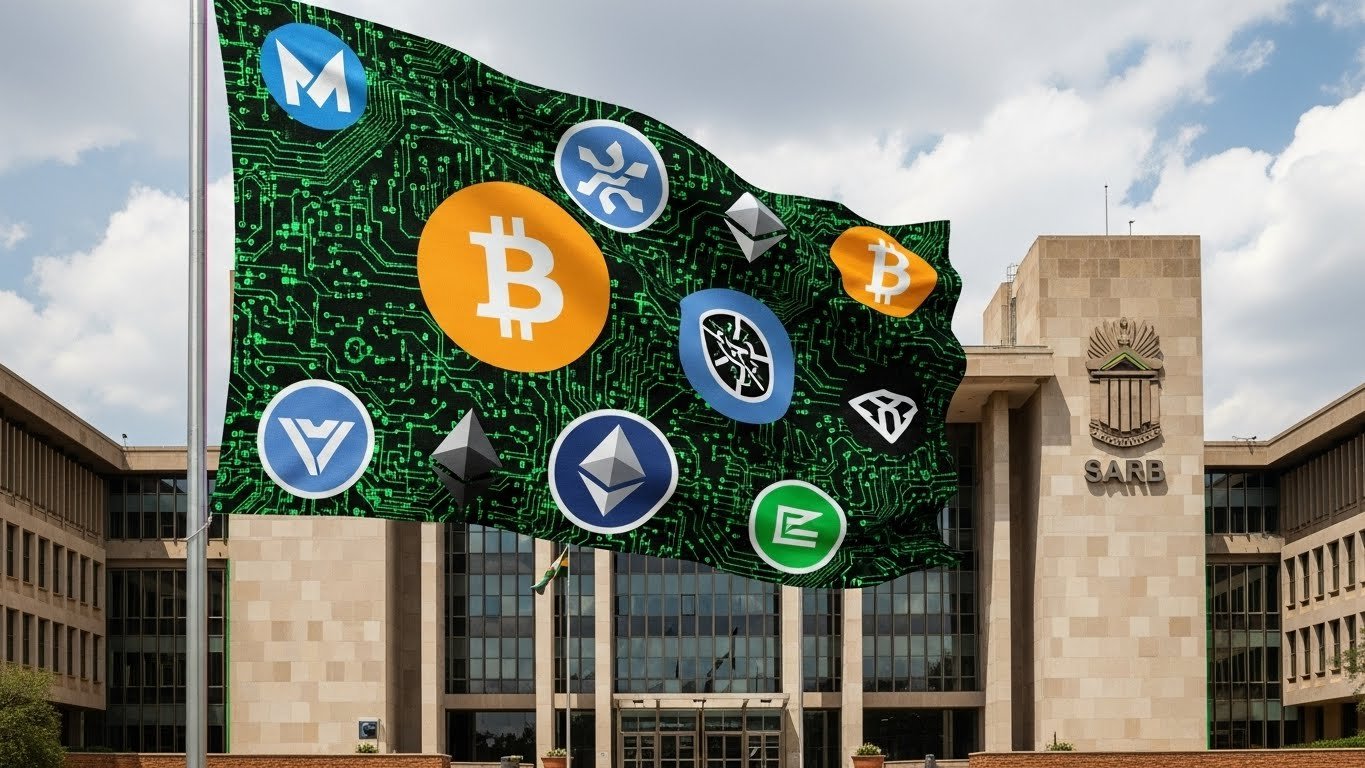
South Africa’s central bank has sent a clear message: crypto and especially stablecoins are now on its list of potential financial risks. In recent months, the South African Reserve Bank (SARB) has released research papers, policy notes and public warnings that highlight how fast-growing crypto assets could threaten financial stability if they are left unchecked.
At the same time, the bank is not trying to turn the clock back. South Africa’s central bank is also exploring central bank digital currency (CBDC), a digital payments roadmap, and a full regulatory framework for stablecoins. This creates a dual message: innovation is welcome, but it must not come at the cost of monetary sovereignty, consumer protection or the safety of the financial system.
In this article, we unpack why South Africa’s central bank is flagging crypto and stablecoins as a financial risk, what exactly worries regulators, and how the coming rules could shape the future of digital assets in the country and across Africa.
South Africa’s Central Bank Steps Into the Crypto Spotlight
South Africa’s central bank, the SARB, has a legal mandate to protect financial stability and support balanced economic growth. For most of its history, that has meant watching banks, insurers, and other traditional players. Now, it also means paying close attention to crypto markets and stablecoin adoption.
The SARB has been studying crypto assets for years, but its tone has sharpened as stablecoins and dollar-linked tokens spread across Africa. In a series of speeches and interviews, Governor Lesetja Kganyago has warned that dollar stablecoins like USDT and USDC could undermine African currencies and central bank authority if they grow without strong rules.
Alongside these public comments, the SARB has published a Primer on Stablecoins and a follow-up paper on the financial stability considerations of stablecoins in South Africa, both of which spell out how stablecoins might trigger systemic problems in the banking system, payments networks and foreign exchange markets. In short, South Africa’s central bank is moving from passive observer to active referee in the world of crypto and stablecoins.
Why Crypto and Stablecoins Are Seen as a Financial Risk

When South Africa’s central bank talks about crypto as a financial risk, it is rarely worried about short-term price crashes alone. Volatility hurts individual investors, but the SARB’s main concern is what might happen if crypto markets and stablecoins become deeply connected to the rest of the financial system.
The stablecoin risk is central here. In its primer, the SARB notes that stablecoins may threaten financial stability if their reserves are weak or badly managed and a “run” begins, forcing issuers to dump assets quickly and spreading stress into money markets and banks. This is similar to how runs on money-market funds or lightly regulated banks can create panic.
The second paper on financial stability presents several scenarios where stablecoins interact with local banks, payment systems and cross-border flows. It concludes that stablecoins could amplify shocks if they become widely used without clear rules on reserves, redemption rights and supervision.
At the same time, the SARB echoes global bodies like the Financial Stability Board (FSB) and the Bank for International Settlements, which have warned that growing links between crypto and traditional finance could spread stress across borders.
Volatility, Leverage and Unbacked Crypto Assets
Beyond stablecoins, unbacked crypto assets such as Bitcoin and many altcoins come with classic risks: extreme price swings, leverage, and speculative bubbles. South African regulators note that most crypto holdings in the country are used for investment rather than everyday payments, and that their value can drop sharply in a short time.
For now, those swings mostly hurt individual traders. But if local banks, pension funds or insurers were to gain heavy exposure to volatile crypto assets without proper capital buffers, the danger could spill into the wider system. This is why South Africa’s central bank views crypto regulation as part of its broader macroprudential policy toolkit, not just a niche topic for tech enthusiasts.
Dollar Stablecoins and Monetary Sovereignty
The sharpest warnings from South Africa’s central bank relate to dollar-pegged stablecoins. Governor Kganyago has argued that widespread use of these tokens across Africa could weaken local currencies and make it harder for central banks to run effective monetary policy.
If households and businesses shift a large share of savings into private USD stablecoins, they effectively move into a form of “privatised dollar,” outside the reach of African regulators. This can undermine efforts to manage inflation, control capital flows and support local credit markets. Research from global banks suggests that stablecoins could pull hundreds of billions of dollars out of emerging-market banks over the next few years, including from countries such as South Africa. From the SARB’s viewpoint, this is not just a crypto risk; it is a sovereignty risk.
Inside the SARB’s Stablecoin Research and Warnings
The SARB’s work on stablecoins as financial risk is not based on guesswork. It is grounded in detailed research and scenario analysis. The Primer on Stablecoins explains how different designs work, from fiat-backed tokens to crypto-collateralised and algorithmic stablecoins. It also highlights that many arrangements remain opaque, with limited transparency on reserves and governance.
The follow-up paper, “The financial stability considerations of stablecoins in South Africa,” takes things further. It uses hypothetical stress scenarios, some inspired by the Bank of England and the US Federal Reserve, to test how stablecoin shocks might interact with South African markets.
These scenarios consider issues such as:
- a sudden loss of confidence in a rand-pegged stablecoin;
- redemption pressure on a foreign-currency stablecoin heavily used by South African residents;
- spillovers from a global stablecoin crisis into local banks and bond markets.
Even without heavy local usage today, the SARB concludes that it must prepare for these possibilities because stablecoins can scale quickly once adoption crosses a tipping point.
Parallel work by the Intergovernmental Fintech Working Group (IFWG) has produced a South African Stablecoin Landscape Diagnostic that maps existing rand-pegged tokens and highlights gaps in licensing, disclosure and risk management. All of this research feeds into a simple message: stablecoin regulation is not optional; it is a key part of protecting financial stability in a digital era.
From Warning to Action: Toward a Crypto and Stablecoin Framework
While South Africa’s central bank flags crypto and stablecoins as financial risk, it is also helping design the rules that will govern them. The country is already working on a policy and regulatory framework for stablecoins, led by the IFWG and supported by National Treasury. Plans include defining stablecoins in law, setting standards for reserve quality, clarifying redemption rights and identifying who will supervise issuers and service providers.
At the same time, South Africa’s digital payments roadmap includes space for a retail CBDC, tokenisation, and a regulatory sandbox for fiat-backed stablecoins. The SARB wants to test real-world use cases under controlled conditions before allowing any large-scale rollout.
This balanced approach reflects a broader theme: innovation with safeguards. The central bank recognises that digital payments, crypto remittances and tokenised assets can support growth and inclusion. But it wants those benefits to sit inside a clear legal and prudential framework, not in a regulatory vacuum.
Impact on Banks, Fintechs and Crypto Platforms
For banks and fintechs, the SARB’s stance means more clarity but also more responsibility. Traditional banks that explore crypto custody, stablecoin settlement or tokenised deposits will need to meet strict capital and risk-management standards, much like they do for other complex products.
Crypto platforms operating in South Africa must already register with the Financial Sector Conduct Authority (FSCA) as crypto asset service providers. As the stablecoin framework matures, these platforms will likely face detailed rules on how they handle rand-pegged tokens, cross-border flows and anti-money-laundering (AML) checks. For consumers and businesses, this should mean better safeguards around crypto trading, clearer disclosures on stablecoin reserves, and more predictable treatment of digital assets in areas such as tax, exchange control and reporting.
South Africa in the Global Debate on Crypto Risks

South Africa is not alone in treating crypto and stablecoins as financial risk. The European Central Bank has warned that stablecoins could drain deposits from traditional banks and pose serious run risks.The FSB has told G20 leaders, at a summit hosted in South Africa, that private credit markets and stablecoins need close monitoring and coherent global rules.
Reports from major institutions like Standard Chartered estimate that dollar-backed stablecoins could pull up to US$1 trillion of deposits out of emerging-market banks within a few years, putting pressure on local balance sheets.frica’s central bank is trying to place the country in the middle ground: not a crypto haven with no rules, and not an innovation desert where everything new is blocked. Thoughtful crypto regulation, combined with exploration of CBDC and digital rand models, is meant to keep the country competitive while still protecting its own financial system.
What It Means for the Future of Crypto in South Africa
When South Africa’s central bank flags crypto and stablecoins as a financial risk, it might sound like a purely negative message. In reality, it is also a sign that digital assets have become too important to ignore.
By moving crypto into the regulatory perimeter, the SARB and its partners aim to turn crypto assets from a wild frontier into a safer, more predictable part of the financial system. This will not remove all risks, but it can reduce the chance that a stablecoin failure, offshore exchange collapse or unregulated lending scheme spills over into the wider South African economy.
For builders and investors, the key will be adaptation. Projects that embrace compliance, transparent governance and sound reserve management are more likely to thrive in this new environment. Those that rely on opacity, excessive leverage or regulatory arbitrage may struggle as the net tightens.
Conclusion
South Africa’s central bank has made its position clear: crypto and especially stablecoins can pose serious financial risks if they grow without strong rules, reliable reserves and proper supervision. Through research papers, public warnings and a growing policy agenda, the SARB is signalling that the era of unregulated digital money is coming to an end.
At the same time, the bank is not closing the door on innovation. Its work on CBDC, its digital payments roadmap, and its support for a stablecoin framework show that it wants to harness the benefits of crypto technology while guarding against its dangers.
For South Africa, the choices made now will shape whether the country becomes a leader in safe, inclusive digital finance or remains on the sidelines while others set the standards. For the rest of the continent, South Africa’s approach to crypto and stablecoin regulation may become a reference point in the wider struggle to balance innovation, stability and sovereignty in the digital age.
FAQs
Why is South Africa’s central bank worried about stablecoins?
South Africa’s central bank worries about stablecoins because they can grow quickly and link directly to banks, money markets and cross-border payments. SARB research shows that if South Africa’s central bank flags crypto are weak or badly managed, a run on a major stablecoin could force issuers to dump assets and trigger broader stress in the financial system.
How could dollar stablecoins threaten African currencies?
Dollar-pegged stablecoins give people an easy way to hold digital dollars outside local banking and regulatory systems. Governor Lesetja Kganyago has warned that if Africans shift large portions of their savings into these tokens, it could weaken local currencies and reduce the power of central banks to run effective monetary policy.
Is South Africa trying to ban crypto and stablecoins?
No. South Africa is not trying to ban crypto or stablecoins. Instead, it is moving toward a clear regulatory framework. Crypto service providers must already register with the FSCA, and the IFWG is working on detailed rules for stablecoins, including how they are backed, governed and supervised.
What role does a CBDC play in South Africa’s strategy?
A central bank digital currency (CBDC) could give South Africans a safe, digital form of central bank money that works well for payments while staying fully inside the regulatory system. The SARB’s digital payments roadmap explores CBDC alongside stablecoins and tokenisation as tools to improve efficiency and inclusion without sacrificing financial stability.
What should crypto users in South Africa expect next?
Crypto users in South Africa should expect more clarity and more rules. That likely means better disclosures, stronger safeguards around stablecoin reserves, and stricter checks on exchanges and wallet providers. While some products may face tighter limits, the long-term goal is to make crypto adoption safer, more transparent and more compatible with the country’s financial-stability mandate.
