


Iran’s economy is once again under intense strain as the national currency, the rial, continues its sharp decline in value. Inflationary pressure, long-standing sanctions, and declining public confidence have pushed the rial to levels that many citizens consider unsustainable. As everyday purchasing power erodes, a growing number of Iranians are turning away from traditional financial systems and toward digital alternatives. Among these, stablecoins have emerged as a preferred tool for preserving value and facilitating transactions.
The surge in stablecoin use during the rial’s collapse is not merely a financial story. It reflects deeper social, political, and geopolitical tensions that extend beyond Iran’s borders. When a population increasingly abandons its national currency, it raises fundamental questions about sovereignty, monetary control, and stability. This shift also invites speculation about whether economic pressure of this scale could ignite broader conflict, either internally or on the regional stage.
This article explores the reasons behind the collapse of Iran’s rial, the rapid rise of stablecoin adoption, and the wider implications for regional stability and global geopolitics. By examining the intersection of currency devaluation, stablecoin adoption, and political pressure, we can better understand whether Iran’s financial crisis could act as a catalyst for future conflict.
The Long Decline of Iran’s Rial
Iran’s rial has faced structural weaknesses for decades, but recent developments have accelerated its decline. Persistent inflation, limited access to international markets, and reduced foreign investment have steadily eroded confidence in the currency. For many citizens, holding rials has become synonymous with watching savings lose value month after month.
Economic sanctions have played a central role in this decline. Restrictions on banking, trade, and energy exports have reduced Iran’s access to foreign currency, limiting the government’s ability to stabilize the rial. As supply constraints intensify, the gap between official exchange rates and black-market valuations widens, further undermining trust.
This erosion of confidence creates a self-reinforcing cycle. As people rush to convert rials into more stable assets, demand for the national currency falls, accelerating depreciation. The result is a rapid collapse that affects every aspect of daily life, from food prices to housing costs.
Inflation and Everyday Economic Pressure
The Impact on Households
For ordinary Iranians, the rial’s collapse is not an abstract macroeconomic issue. It directly affects the cost of living. Essential goods become more expensive, wages struggle to keep pace with inflation, and long-term financial planning becomes nearly impossible.
Households that once relied on savings in local currency find their purchasing power shrinking. This pressure drives people to seek alternatives that can protect value, even if those alternatives exist outside traditional financial systems.
Loss of Trust in Monetary Policy
A key consequence of prolonged inflation is the loss of trust in monetary authorities. When citizens believe that policymakers cannot or will not stabilize the currency, they begin to act independently. This behavior weakens the effectiveness of traditional tools such as interest rate adjustments or capital controls. In Iran’s case, this loss of trust has accelerated the shift toward digital assets, particularly stablecoins, which offer a perceived refuge from inflationary erosion.
Why Stablecoin Use Is Surging in Iran
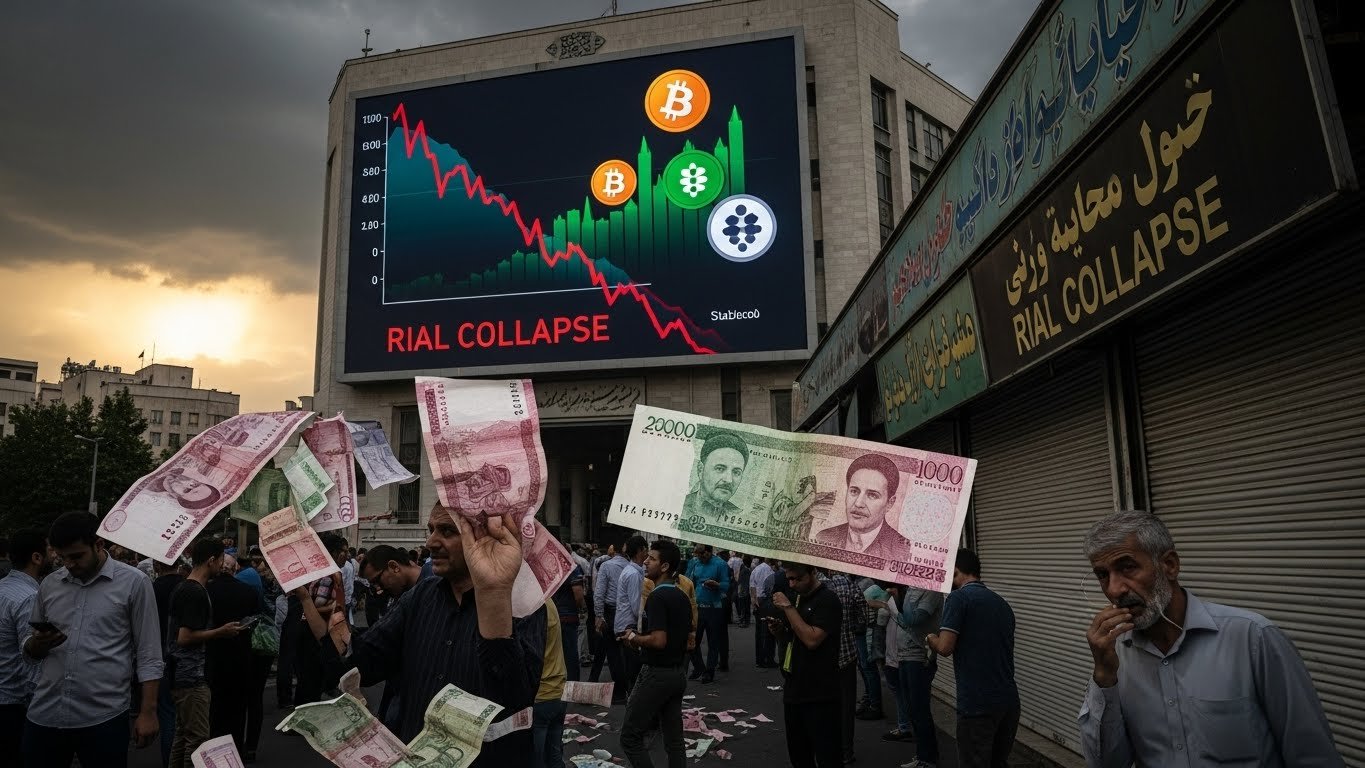
Stablecoins are digital assets designed to maintain a relatively stable value, often pegged to major fiat currencies. For users facing rapid currency devaluation, stablecoins provide an alternative that combines accessibility with relative price stability.
In Iran, stablecoins have become increasingly attractive for several reasons. They allow individuals to store value outside the domestic banking system, facilitate cross-border transactions, and bypass some of the limitations imposed by sanctions. While not without risks, stablecoins offer a level of predictability that the rial no longer provides. The surge in stablecoin adoption reflects both necessity and innovation. As traditional financial channels become constrained, digital solutions fill the gap, enabling people to participate in a parallel financial ecosystem.
The Role of Sanctions in Accelerating Digital Adoption
Financial Isolation and Innovation
International sanctions have isolated Iran from much of the global financial system. While these measures aim to apply economic pressure, they also incentivize alternative systems that operate beyond traditional oversight.
Stablecoins and broader cryptocurrency usage have benefited from this environment. When access to foreign currencies and international transfers is restricted, decentralized digital assets become practical tools rather than speculative instruments.
Circumventing Barriers
Stablecoins allow users to transact internationally without relying on sanctioned banking networks. This capability has made them appealing not only to individuals but also to small businesses seeking to maintain trade relationships. While this does not eliminate the economic challenges posed by sanctions, it reduces their effectiveness in certain areas, complicating the geopolitical landscape.
Social Implications of Currency Collapse
Public Sentiment and Economic Anxiety
A collapsing currency often leads to heightened social tension. As economic conditions worsen, frustration can spill over into public dissent. In Iran, economic grievances have historically been a catalyst for protests and political unrest.
The widespread adoption of stablecoins can be seen as both a coping mechanism and a signal of deeper dissatisfaction. When people abandon the national currency, it reflects a lack of confidence not only in economic management but also in broader governance structures.
Generational Shifts in Financial Behavior
Younger generations, more familiar with digital technology, are often the earliest adopters of crypto-based solutions. In Iran, this demographic shift is accelerating the move toward stablecoins, reshaping financial norms and expectations. This generational divide may have long-term consequences, influencing how future economic policies are received and implemented.
Government Response and Regulatory Tensions
Attempts to Maintain Control
Governments facing currency collapse often respond by tightening controls on capital flows and alternative assets. In Iran, authorities have expressed concern over the growing use of cryptocurrencies and stablecoins, viewing them as threats to monetary sovereignty. However, enforcement is challenging. Digital assets operate across borders and platforms, making comprehensive control difficult without significant technological and political investment.
Balancing Restriction and Reality
Efforts to restrict stablecoin use risk pushing economic activity further underground. Authorities must balance the desire for control with the practical realities of an increasingly digital economy. This tension underscores the broader challenge of governance in an era where technology evolves faster than regulation.
Geopolitical Implications of Rising Stablecoin Use
Economic Pressure as a Catalyst for Conflict
Economic collapse has historically been a factor in geopolitical escalation. When internal pressures mount, governments may adopt more confrontational external policies to redirect attention or assert strength.
The question of whether Iran’s rial collapse and stablecoin surge could ignite a new conflict depends on multiple variables. Economic desperation can heighten risk-taking, but it can also encourage caution if resources are constrained.
Regional and Global Reactions
Iran’s economic instability does not exist in isolation. Regional actors and global powers closely monitor developments, aware that financial crises can have spillover effects. The increasing role of digital currencies adds a new layer of complexity. As stablecoins enable alternative economic channels, they alter traditional leverage points used in international diplomacy.
Stablecoins as a Tool of Economic Resilience
Despite the risks, stablecoins also represent resilience. For individuals and small businesses, they provide a means to adapt and survive under difficult conditions. This adaptability challenges assumptions about how economic pressure translates into political outcomes. By reducing dependence on the rial, stablecoins may alleviate some immediate hardships, potentially dampening unrest rather than exacerbating it. At the same time, they weaken traditional mechanisms of state control, introducing new uncertainties.
Risks Associated With Stablecoin Dependence
Exposure to External Volatility
While stablecoins aim to maintain value, they are not immune to external shocks. Regulatory changes, technical failures, or shifts in global crypto markets can affect accessibility and trust. For users relying heavily on stablecoins, these risks add another layer of uncertainty to an already fragile economic environment.
Legal and Security Concerns
Operating in a gray regulatory area exposes users to legal risks. Additionally, cybersecurity threats remain a concern, particularly for individuals with limited access to secure digital infrastructure. These vulnerabilities highlight that stablecoins are a coping mechanism rather than a comprehensive solution.
Historical Parallels and Lessons
History offers examples of currency collapse leading to profound political change. In some cases, economic crises have sparked reform and integration. In others, they have preceded conflict and instability.
Iran’s situation is unique, shaped by sanctions, regional dynamics, and technological change. The rise of stablecoins introduces an unprecedented variable, altering how economic stress manifests and how societies respond. Understanding these parallels helps contextualize current developments without assuming inevitable outcomes.
Could a New Conflict Be Ignited?
The question of whether Iran’s economic crisis could ignite a new conflict does not have a simple answer. Economic pressure increases risk, but it does not determine outcomes alone. Political leadership, regional dynamics, and international engagement all play critical roles.
Stablecoin adoption complicates traditional narratives. By providing alternative economic pathways, it may reduce some immediate pressures while creating new strategic uncertainties. This dual effect makes predicting outcomes more challenging. What is clear is that Iran’s financial landscape is undergoing a significant transformation, one with implications far beyond its borders.
The Broader Significance for Global Finance
Iran’s experience illustrates how digital assets are reshaping responses to economic crisis. Stablecoins are no longer niche tools but integral components of financial survival in certain contexts.
This development raises broader questions about the future of monetary sovereignty, the effectiveness of sanctions, and the evolving nature of economic power in a digital age. As more countries face economic stress, the Iranian case may serve as a precedent, influencing how governments and populations navigate similar challenges.
Conclusion
Iran’s rial collapse and the surge in stablecoin use represent a convergence of economic distress and technological adaptation. Faced with inflation, sanctions, and declining confidence, many Iranians have turned to stablecoins as a means of preserving value and maintaining economic activity.
This shift carries significant social, political, and geopolitical implications. While stablecoins offer resilience, they also challenge traditional mechanisms of control and influence. Whether these dynamics contribute to heightened conflict or foster adaptation remains uncertain.
What is undeniable is that the rise of stablecoins amid Iran’s currency crisis signals a broader transformation in how societies respond to economic pressure. In a world where digital finance increasingly intersects with geopolitics, the situation in Iran provides a powerful case study of change in motion.
FAQs
Q: Why is Iran’s rial collapsing so rapidly
Iran’s rial is collapsing due to persistent inflation, economic sanctions, limited access to foreign currency, and declining public confidence in monetary policy.
Q: Why are stablecoins becoming popular in Iran
Stablecoins are popular because they offer relative price stability, enable value preservation, and allow transactions outside the traditional banking system during currency devaluation.
Q: Does stablecoin adoption weaken government control
Stablecoin adoption can weaken traditional monetary control by reducing reliance on the national currency, though it also provides economic resilience for citizens.
Q: Could Iran’s economic crisis lead to a new conflict
Economic crises increase risk but do not guarantee conflict. Outcomes depend on political decisions, regional dynamics, and how internal pressures are managed.
Q: What does Iran’s situation mean for global finance
Iran’s experience highlights how digital currencies are reshaping responses to economic stress, raising questions about monetary sovereignty and the future effectiveness of sanctions.
