


Cryptocurrencies are no longer a fringe concept relegated to niche investors and tech enthusiasts. Over the past decade, digital assets have steadily migrated into mainstream financial conversations and institutional frameworks. At the forefront of this evolution is the role of stablecoins, digital assets designed to maintain a consistent value by pegging to traditional currencies like the US dollar or the British pound. In a bold projection that continues to shape expectations within the financial sector, the Coinbase UK CEO predicts stablecoins will enter mainstream payment infrastructure by 2026, a timeline that signals accelerated adoption and integration of digital currency mechanisms into everyday financial systems. This forecast encapsulates more than just price speculation; it represents a vision where digital currencies will operate not as speculative instruments, but as foundational tools for global commerce and payments. The potential mainstreaming of stablecoins brings implications for consumers, businesses, regulators, and the very concept of money itself.
Stablecoins have emerged as a bridge between traditional finance and decentralized digital ecosystems. Unlike more volatile cryptocurrencies, stablecoins offer price stability, making them more viable for transactions, remittances, and routine financial operations. As the financial ecosystem evolves, industry leaders like the Coinbase UK CEO are increasingly vocal about where the next phase of digital currency integration will unfold. Predicting that stablecoins will become embedded within mainstream payment infrastructure by 2026 emphasizes an expected shift toward digital-first financial systems that promise greater efficiency, speed, and accessibility. In this article, we explore the reasoning behind this forecast, what it means for the broader financial landscape, how stablecoins differ from other digital assets, and the challenges and opportunities that lie ahead in integrating stablecoins into everyday payment processes.
Understanding Stablecoins and Their Unique Role in Digital Finance
Stablecoins represent a transformative innovation within the broader cryptocurrency and digital asset ecosystem. Unlike traditional digital currencies such as Bitcoin or Ethereum, which are subject to significant price fluctuations, stablecoins are specifically engineered to minimize volatility. This stability is typically achieved by pegging the coin’s value to a reserve asset such as a fiat currency or a basket of commodities. As a result, stablecoins offer a reliable medium of exchange and store of value without the unpredictability that characterizes many digital assets.
The fundamental appeal of stablecoins lies in their ability to combine the benefits of digital currencies—such as fast settlement times and borderless transfer capabilities—with the reliability of traditional money. This intersection positions stablecoins as a viable candidate for mainstream payment infrastructure, bridging the gap between legacy systems and emerging digital frameworks. The Coinbase UK CEO’s prediction that stablecoins will be integrated into mainstream payments by 2026 suggests a strong confidence in the technology’s ability to meet real-world financial demands. As stablecoins continue to evolve, they are gaining traction among financial institutions, technology companies, and regulators as a complement to existing payment rails rather than a replacement. This opens the door to enhanced financial inclusion, cost efficiency, and competitive innovation across the global payments landscape.
Why the 2026 Prediction Matters for Payments and Financial Systems
The timeline set forth by the Coinbase UK CEO is significant for several reasons. First, it establishes a clear target for when digital assets, specifically stablecoins, may transition from experimental technology to practical payment tools used by businesses and consumers alike. Predicting that this shift could occur as early as 2026 signals the speed at which industry leaders believe the financial ecosystem is evolving. Historically, the integration of new payment technologies has taken years, sometimes decades, as infrastructure, regulation, and consumer behavior adapt. However, stablecoins benefit from a unique convergence of technological maturity and market demand. They address longstanding challenges associated with digital payments, such as settlement delays, high transaction costs, and cross-border inefficiencies. The expectation that they will enter mainstream payment infrastructure within a few years reflects confidence in the readiness of both technology and market participants to adopt digital-first solutions.
By forecasting stablecoin integration into mainstream payments, the Coinbase UK CEO is acknowledging the financial sector’s trajectory toward digital transformation. This development will influence how banks, payment processors, merchants, and consumers interact with money. It will also reshape financial inclusion by providing individuals who are underserved by traditional banking systems with access to fast, cost-effective, and reliable payment mechanisms. In essence, the prediction emphasizes not just evolution, but progression toward a more integrated and digitally native financial environment.
Stablecoins vs. Traditional Payment Methods
To understand the broader impact of stablecoin adoption, it is important to contrast stablecoins with traditional payment methods. Traditional systems, such as credit card networks and bank transfers, have long been the backbone of global commerce. These systems are robust and widely accepted but are often hindered by limitations that stablecoin technology seeks to address. One of the core challenges with traditional payment infrastructure is the time it takes to settle transactions. Cross-border transfers can take several days to complete, and domestic interbank payments can still involve delays or intermediary steps that add complexity. In contrast, stablecoins operate on blockchain technology, which enables near-instant settlement and reduces the need for centralized intermediaries. This capability can significantly accelerate payment processing, particularly for global transactions.
Furthermore, traditional payment networks often involve multiple fees, including interchange charges, processing costs, and foreign exchange fees for international payments. These costs can add up for consumers and merchants alike. Stablecoins, by virtue of their decentralized structure and efficient settlement mechanisms, have the potential to reduce transactional costs. While not eliminating all fees, their adoption can introduce competitive pressure on legacy systems to innovate and reduce friction. Another key difference lies in accessibility. Traditional banking infrastructure may be limited or inaccessible in certain regions, leaving many individuals without effective financial tools. Stablecoins, when integrated into mainstream payment systems, can provide an alternative means of participation for individuals with internet access but without traditional banking services. This democratizes access to financial services and empowers users to engage with global commerce more seamlessly.
The Role of Regulation in Mainstream Stablecoin Adoption
Regulation remains a central consideration in the mainstream adoption of stablecoins. As digital assets become more ingrained in financial systems, regulators around the world are grappling with how to balance innovation with stability, consumer protection, and systemic risk management. The prediction that stablecoins will enter mainstream payment infrastructure by 2026 implies progress in regulatory frameworks that support their use.
Regulators are tasked with ensuring that stablecoins are backed by transparent reserves and that mechanisms are in place to protect against misuse, fraud, or financial instability. The emphasis on regulatory clarity is crucial because mainstream adoption hinges on trust and confidence. Consumers and businesses are more likely to embrace stablecoin payments if they are underpinned by clear, consistent, and enforceable regulations. Different countries are advancing in varied ways. Some have developed comprehensive guidelines that outline reserve requirements, auditing standards, and compliance protocols for stablecoin issuers. Others are still working to establish foundational legal frameworks. The gradual convergence toward clearer regulatory standards will help pave the way for stablecoins to become integrated into mainstream payment systems. In this context, the timeline towards 2026 reflects not just market readiness, but an evolving global regulatory landscape that must support widespread stablecoin use.
Technological Infrastructure Required for Integration
In addition to regulatory developments, the technological infrastructure required to support stablecoin integration into mainstream payments is a critical factor. Blockchain networks that host stablecoins must be scalable, secure, and capable of supporting high transaction volumes. Additionally, interoperability between blockchain networks and existing payment systems needs to be seamless to facilitate widespread adoption. Advancements in blockchain scalability technologies are underway, addressing challenges such as network congestion and transaction throughput. These improvements are crucial for stablecoins to function effectively within high-demand payment environments. Without the ability to process large volumes of transactions quickly and cost-effectively, stablecoins would struggle to match the performance of existing payment rails.
Integration also requires financial institutions and payment processors to adopt interfaces that can communicate between traditional systems and blockchain-based assets. This includes technical solutions that enable wallets, point-of-sale systems, and banking platforms to support stablecoin transactions. Collaboration between blockchain developers, traditional financial technology providers, and infrastructure vendors is essential to create a cohesive ecosystem where stablecoins can operate alongside established payment methods. The development of open standards and shared protocols can facilitate interoperability, reducing technical barriers that might otherwise slow adoption. In this context, the prediction that stablecoins will enter mainstream payment infrastructure by 2026 signals confidence in the pace of technological evolution and collaborative efforts to modernize global payment ecosystems.
Consumer Adoption and Market Dynamics
Consumer behavior is a powerful force in determining whether stablecoins can transition from niche digital assets to everyday payment tools. For stablecoins to become mainstream, consumers need to view them as reliable, convenient, and accessible alternatives to traditional payment methods. Awareness and education are key components of this shift, as familiarity with stablecoin technology influences trust and willingness to use them for daily transactions. As digital wallets and financial apps increasingly integrate stablecoin support, consumers will have more opportunities to experience their benefits firsthand. Early adopters, including tech-savvy users and digital-first consumers, may lead this shift and encourage broader adoption through network effects. Businesses also play a role by accepting stablecoin payments, further normalizing their use in commerce.
Market dynamics, including competition between stablecoin issuers, are likely to influence consumer adoption patterns. Stablecoin issuers with strong reserve backing, transparent practices, and user-friendly platforms may gain wider acceptance among consumers and merchants. Furthermore, service providers that integrate stablecoin payments into existing commerce platforms will help stimulate usage by lowering adoption barriers. The interplay between consumer adoption, business acceptance, and technological readiness creates a dynamic environment where stablecoins can either flourish or face resistance. The Coinbase UK CEO’s prediction assumes positive momentum across these areas, envisioning a future where stablecoins become an accepted part of mainstream financial activity.
The Future of Payments: Envisioning a Stablecoin-Integrated Ecosystem
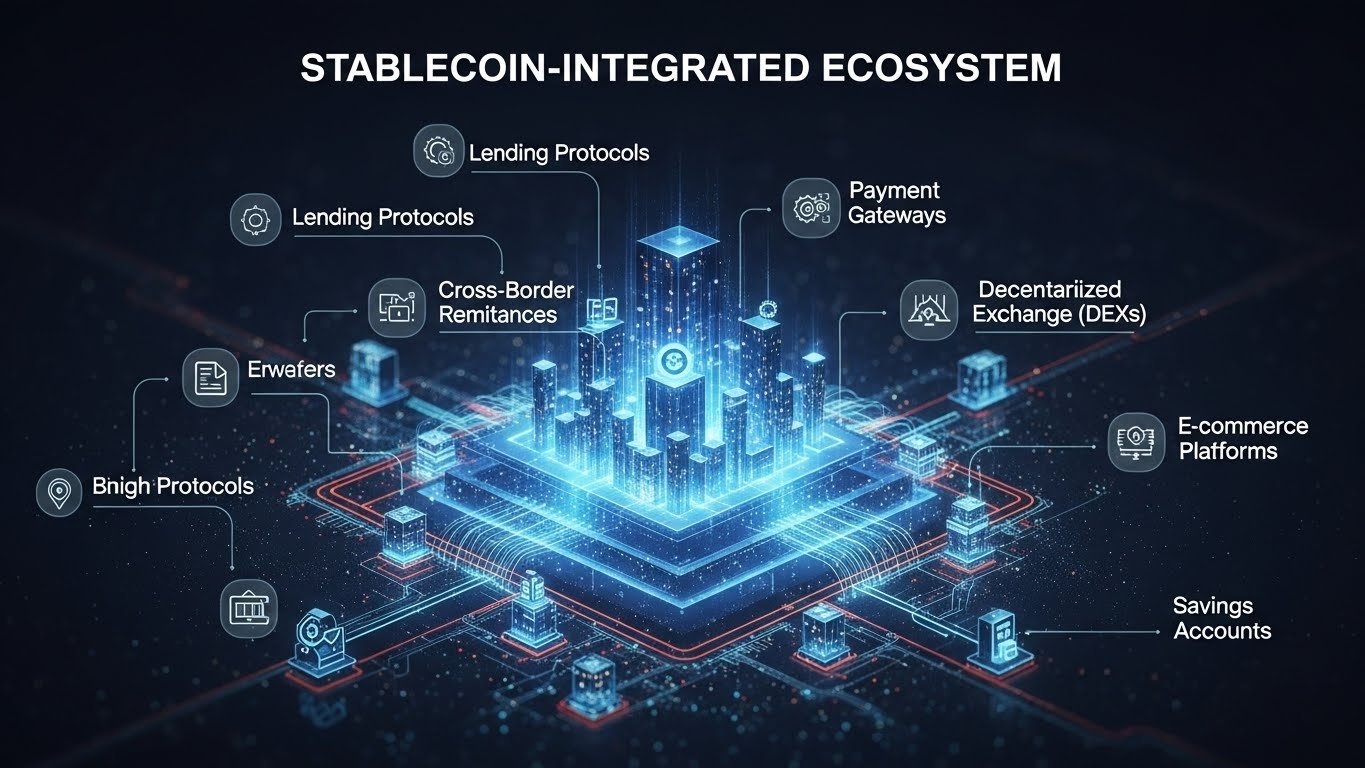
Looking ahead, the integration of stablecoins into mainstream payment infrastructure has the potential to reshape how money moves around the world. A stablecoin-integrated ecosystem could offer real-time settlement, lower costs, greater financial inclusion, and enhanced cross-border capabilities. For individuals, this could mean faster remittances, more accessible digital wallets, and seamless payments across borders without excessive fees. For businesses, it could mean enhanced efficiency, reduced reliance on legacy systems, and access to global markets with greater ease.
The predicted timeline of stablecoin adoption by 2026 suggests that digital currency infrastructure will evolve rapidly. This shift could influence broader financial innovation, leading to hybrid systems that blend traditional banking with blockchain-based technology. As trust in stablecoins grows, financial institutions may incorporate them into loyalty programs, payroll systems, merchant services, and peer-to-peer payment platforms. In this future, the concept of money may increasingly center around digital representations that offer the best attributes of both fiat currency and blockchain technology. The coming years will be pivotal for stablecoin adoption, as progress in regulatory clarity, technological infrastructure, and consumer acceptance converges to transform the payment landscape. If the prediction holds true, stablecoins may no longer be a peripheral aspect of digital finance, but rather a core component of mainstream economic activity.
Conclusion
The Coinbase UK CEO’s prediction that stablecoins will enter mainstream payment infrastructure by 2026 reflects a bold vision for the future of global finance. Stablecoins, with their blend of price stability, digital efficiency, and cross-border capabilities, are well-positioned to address inefficiencies in traditional payment systems. Achieving mainstream adoption requires progress in regulatory frameworks, technological development, and consumer acceptance. The next few years will be instrumental in defining how stablecoins transition from innovative digital assets to everyday tools for commerce and financial activity. As the financial ecosystem continues to evolve, the integration of stablecoins could mark a major milestone in the journey toward a more inclusive, efficient, and digitally native payment landscape.
FAQs
Q: How realistic is the prediction that stablecoins will enter mainstream payment infrastructure by 2026, and what key factors will influence this outcome?
The prediction that stablecoins will enter mainstream payment infrastructure by 2026 is ambitious yet grounded in observable trends across the financial landscape. Achieving this target requires coordinated progress in several areas, including regulatory clarity, technological scalability, and consumer adoption. Regulatory frameworks need to establish clear protections and standards for stablecoin issuers and users, ensuring transparency and trust. Technological improvements must enhance blockchain scalability and interoperability with existing payment systems. Wide-scale consumer adoption hinges on ease of use, awareness, and business acceptance of stablecoin payments. When these elements align, stablecoins can transition from niche digital assets to widely used payment tools.
Q: What advantages do stablecoins offer over traditional payment methods that support their mainstream adoption?
Stablecoins provide a blend of digital efficiency and stability that is often missing in both traditional payment systems and more volatile cryptocurrencies. Unlike traditional systems, which can involve slow settlement times and multiple intermediary fees, stablecoins enable near-instant settlement and potentially lower costs. Their value stability, achieved by pegging to fiat currencies, increases their suitability for everyday transactions. Additionally, stablecoins can facilitate cross-border transactions with greater speed and reduced friction, enabling consumers and businesses to participate in global commerce more fluidly.
Q: What role do regulators play in enabling stablecoins to become part of mainstream payment infrastructure, and what challenges might arise?
Regulators play a central role in ensuring that stablecoins operate within frameworks that protect consumers, maintain financial stability, and prevent misuse or fraud. Clear guidelines around reserve backing, auditing standards, and compliance are essential for building trust. Challenges arise when regulatory approaches vary across jurisdictions, potentially creating inconsistencies that slow adoption. Furthermore, regulators need to balance innovation with oversight, preventing systemic risks without stifling technological progress. Harmonizing regulations globally will be key to creating an environment where stablecoins can function seamlessly within mainstream payments.
Q: How might consumer adoption of stablecoin payments evolve, and what barriers could slow this process?
Consumer adoption of stablecoin payments is likely to evolve gradually as awareness grows and digital wallets or payment apps integrate stablecoin support. Early adopters and tech-savvy users may drive initial usage, encouraging broader acceptance through network effects. Businesses that accept stablecoin payments will further normalize their use in commerce. Barriers to adoption include lack of familiarity among mainstream consumers, concerns about security and digital asset management, and limited integration with everyday financial tools. Education, user-friendly platforms, and widespread merchant support will be critical to overcoming these obstacles.
Q: What long-term impact could mainstream stablecoin adoption have on the global financial system and economic activity?
Mainstream adoption of stablecoins could significantly transform the global financial system by enabling faster payments, enhanced cross-border transactions, and greater financial inclusion. For individuals, stablecoins may offer affordable and efficient alternatives for remittances and peer-to-peer transfers. For businesses, stablecoin integration could reduce payment processing costs and expand access to international markets. Over time, stablecoins could influence how money is conceptualized and used, blending the security of traditional currency with the efficiency of digital infrastructure. This evolution may lead to hybrid financial systems that leverage the strengths of both conventional and digital finance, resulting in a more interconnected and accessible global economy.
