

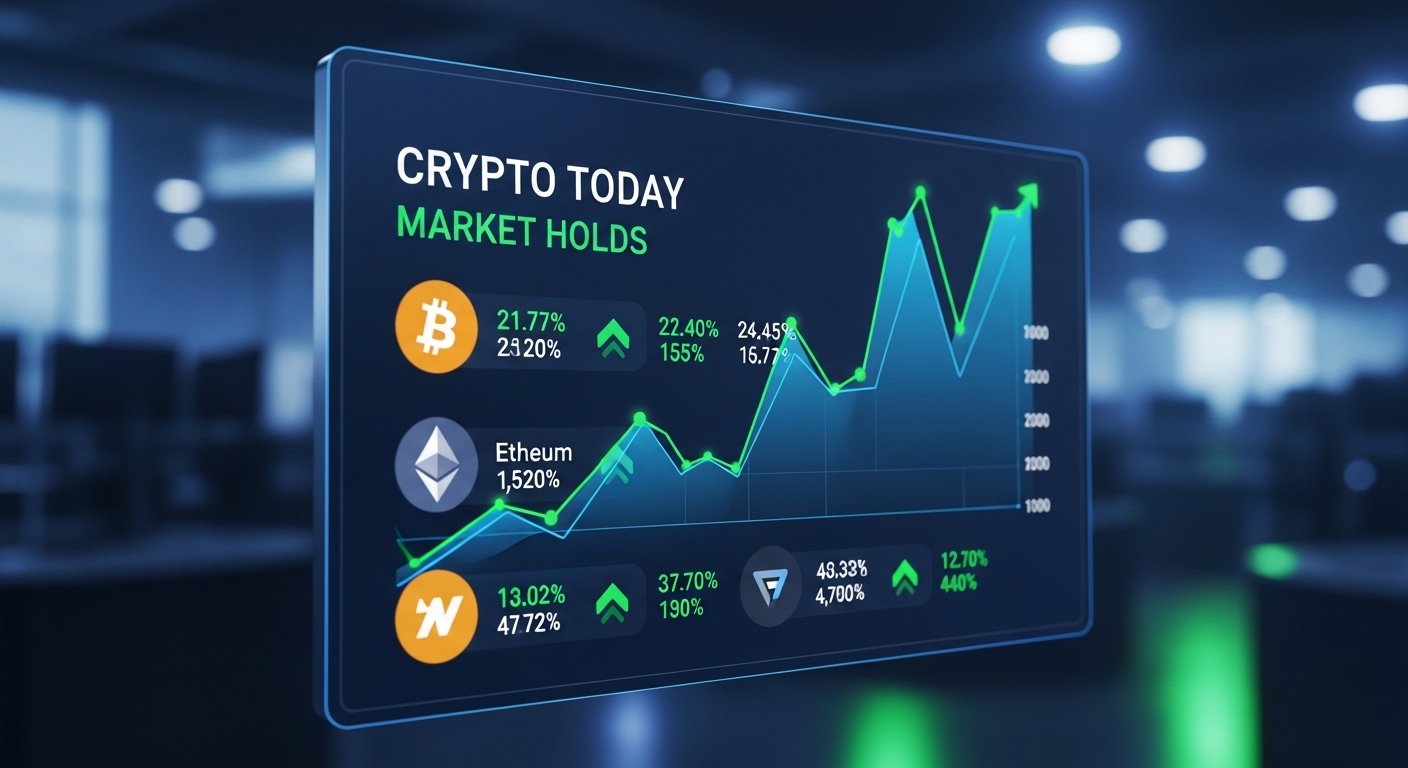
Crypto Today Market Holds is currently locked in a tense standoff between resilience and uncertainty. With the total crypto market capitalization holding near $2.4 trillion, digital assets have managed to avoid a deeper breakdown despite persistent bearish sentiment surrounding Bitcoin, Ethereum, and XRP. This level reflects stability on the surface, yet underneath it lies a market dominated by caution, reduced risk appetite, and hesitant traders waiting for clearer signals.
Over the past several weeks, the crypto market has struggled to generate sustained upside momentum. Rallies have been met with selling pressure, while dips have attracted buyers only strong enough to defend key support levels rather than push prices decisively higher. This environment has created a range-bound market structure where optimism is limited and confidence remains fragile. The broader sentiment across the cryptocurrency market has been influenced by macroeconomic uncertainty, tightening financial conditions, and declining speculative interest.
As a result, traders are increasingly selective, focusing on capital preservation rather than aggressive growth. Bitcoin, Ethereum, and XRP—three of the most influential assets in the crypto ecosystem—are all showing signs of consolidation under pressure, reinforcing the overall bearish tone. This article explores why the crypto market holds $2.4 trillion despite negative sentiment, how Bitcoin, Ethereum, and XRP are shaping market psychology, and what investors should watch as the market searches for its next decisive move.
$2.4 trillion crypto market valuation

A $2.4 trillion crypto market cap represents a significant concentration of global capital. Even during periods of uncertainty, this valuation confirms that cryptocurrencies remain a major asset class rather than a speculative fringe market. However, the inability to move decisively above this level highlights hesitation among market participants.
Why this level matters for the crypto market
The $2.4 trillion zone has become a psychological midpoint for the crypto market. It reflects a balance where sellers are active enough to prevent breakouts, while buyers remain committed enough to defend against sharp declines. In previous market cycles, similar consolidation phases often preceded major trend changes, either upward or downward.
This valuation also signals that long-term investors continue to hold positions, even as short-term traders reduce exposure. Capital has not exited the crypto ecosystem entirely; instead, it has shifted toward lower-risk strategies within the crypto market, including stablecoins and high-liquidity assets.
Reduced trading activity and market hesitation
One of the defining features of the current crypto market is declining trading volume. Lower volume suggests reduced participation, which often accompanies bearish sentiment. When fewer traders are willing to commit capital, price movements become slower, less reliable, and more prone to false breakouts. This reduction in activity reinforces the feeling that the market is waiting for a catalyst—either a macroeconomic shift, regulatory clarity, or renewed institutional interest—to break the stalemate.
Why bearish sentiment dominates the crypto market
Bearish sentiment does not emerge without reason. In the current environment, multiple factors are combining to suppress confidence across the crypto market.
Macroeconomic pressure and risk aversion
Global financial uncertainty has pushed investors toward safer assets, reducing appetite for volatile investments like cryptocurrencies. When traditional markets exhibit caution, the crypto market often feels amplified pressure due to its higher risk profile. This risk-off behavior has limited speculative flows, making it harder for Bitcoin and altcoins to sustain rallies. Even positive developments struggle to gain traction when broader sentiment remains defensive.
Declining retail interest
Retail participation is a crucial driver of momentum in the cryptocurrency market. Recently, public interest has cooled, with fewer new participants entering the space. This lack of fresh capital reduces upward pressure on prices and reinforces bearish narratives. Historically, periods of low interest have coincided with consolidation phases, where markets reset expectations before the next growth cycle.
Sentiment indicators signal caution
Market sentiment gauges currently reflect fear rather than optimism. Traders are increasingly focused on downside protection, using tighter risk management and avoiding leverage. While fear can sometimes mark market bottoms, it can also persist longer than expected when confidence erodes slowly.
Bitcoin’s role in shaping crypto market direction
As the largest cryptocurrency by market capitalization, Bitcoin remains the primary driver of overall crypto market sentiment. Its price behavior often determines whether traders feel comfortable taking risk across the broader market.
Bitcoin struggles to reclaim key resistance
Bitcoin has faced difficulty sustaining moves above major psychological resistance levels. Each attempt to push higher has encountered selling pressure, reinforcing the perception that upside momentum is limited in the near term. This inability to break higher has kept traders cautious, as Bitcoin’s consolidation suggests uncertainty rather than strength. Without a clear trend, the crypto market remains vulnerable to shifts in sentiment.
Support levels and downside concerns
At the same time, Bitcoin has managed to defend important support zones. This defense prevents panic selling but does little to inspire confidence. Many traders fear a deeper correction if these supports fail, contributing to a defensive posture across the market. Bitcoin’s current behavior reflects a market searching for direction—strong enough to avoid collapse, yet too weak to ignite enthusiasm.
Crypto Today Market Holds and capital concentration
Bitcoin dominance remains elevated, indicating that capital within the crypto market is concentrating in perceived safer assets rather than flowing into altcoins. High dominance typically appears during cautious phases, as investors reduce exposure to higher-risk tokens. This dynamic limits broad market growth and keeps many altcoins under pressure despite Bitcoin’s relative stability.
Ethereum under pressure but holding critical ground
Ethereum plays a unique role in the crypto market as both a major asset and the foundation of decentralized applications. Its performance often reflects broader ecosystem health.
Ethereum’s struggle for momentum
Ethereum has shown signs of technical weakness, with price action failing to generate sustained upward movement. Despite this, it has managed to hold above key support levels, suggesting that long-term confidence has not disappeared entirely. This balance mirrors the broader crypto market—cautious but not collapsing.
Network fundamentals versus market sentiment
While Ethereum’s fundamentals remain strong, market sentiment often overrides long-term value in the short term. Reduced activity, lower speculative interest, and cautious investors have limited ETH’s upside. As a result, Ethereum’s price has become more reactive to Bitcoin’s movements and overall risk sentiment rather than independent growth drivers.
Why Ethereum matters for the crypto market
Ethereum’s stability is essential for confidence in decentralized finance and smart-contract platforms. If Ethereum were to break key support levels, it could amplify bearish sentiment across the entire crypto market.
XRP’s resilience amid a cautious crypto market
XRP has shown relative resilience compared to some altcoins, maintaining key support levels even as bearish sentiment persists.
XRP price stability and market perception
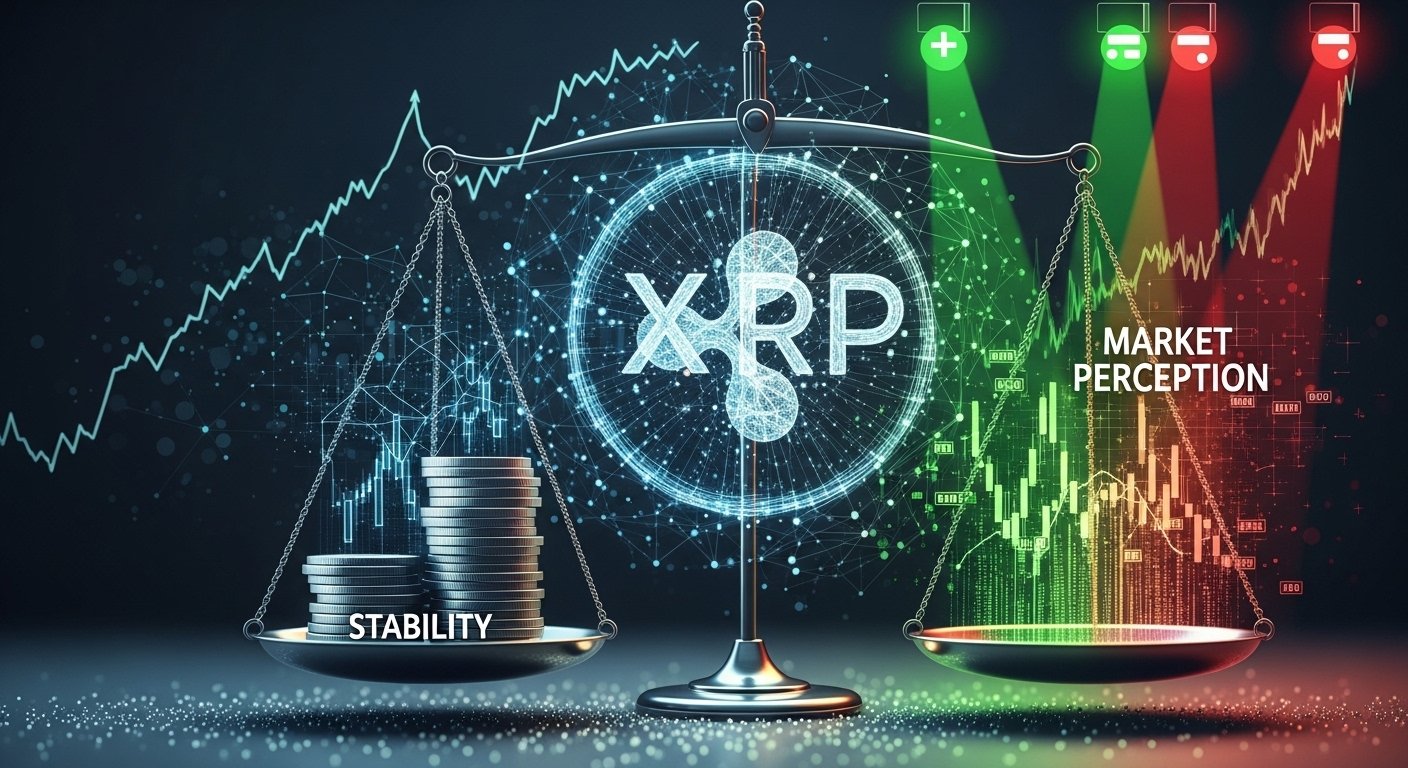
XRP’s ability to hold support suggests that buyers remain active. However, this stability should not be mistaken for bullish momentum. In a risk-averse crypto market, XRP’s price action reflects cautious accumulation rather than aggressive optimism.
Sensitivity to broader market conditions
Despite its unique characteristics, XRP remains influenced by overall crypto market sentiment. When confidence weakens, XRP can experience sudden volatility as traders adjust exposure quickly. This sensitivity reinforces the importance of monitoring broader market trends rather than focusing solely on individual assets.
Key sentiment signals shaping the crypto market
Beyond price charts, sentiment indicators provide insight into market psychology.
Fear as a dominant theme
Fear remains a defining feature of the current crypto market. Traders are hesitant to chase rallies, and many prefer to wait for confirmation before committing capital. This behavior slows recovery but can also reduce downside risk by limiting excessive speculation.
Volume as confirmation
Trading volume continues to act as a critical signal. Without increasing volume, price movements lack conviction. A meaningful shift in volume would likely precede any major trend change in the crypto market.
Attention and engagement cycles
Market engagement tends to move in cycles. Periods of low attention often coincide with consolidation phases, where long-term investors quietly position while short-term traders step aside.
What could change the crypto market narrative
While bearish sentiment dominates, markets are dynamic, and conditions can shift rapidly.
A return of risk appetite
Improved macroeconomic conditions or increased confidence in financial markets could encourage investors to re-enter the crypto market. Such a shift would likely benefit Bitcoin first, followed by Ethereum and select altcoins.
Strong technical confirmation
Clear technical breakouts supported by volume would help rebuild confidence. Higher lows and sustained price strength could signal that bearish sentiment is fading.
Renewed long-term optimism
Positive developments in adoption, regulation, or infrastructure could reframe market narratives. When long-term optimism aligns with technical strength, the crypto market often responds decisively.
Conclusion
The crypto market holding $2.4 trillion reflects underlying resilience, but bearish sentiment continues to suppress enthusiasm around Bitcoin, Ethereum, and XRP. Support levels remain intact, preventing a deeper decline, yet the absence of strong conviction keeps prices range-bound.
For now, the market’s message is clear: stability exists, but confidence is still rebuilding. Investors and traders should focus on patience, risk management, and confirmation rather than prediction. As history has shown, the crypto market can shift quickly once sentiment changes—but until then, caution remains the dominant theme.
FAQs
Q: Why is the crypto market holding at $2.4 trillion?
The crypto market is balancing cautious buyers defending support and sellers fading rallies. Capital remains in the ecosystem, but conviction is limited due to bearish sentiment.
Q: Is bearish sentiment bad for long-term crypto investors?
Bearish sentiment can be challenging in the short term but often creates opportunities for long-term investors. Historically, consolidation phases have preceded major market moves.
Q: How does Bitcoin influence the entire crypto market?
Bitcoin sets the tone for risk appetite across the crypto market. When Bitcoin struggles, altcoins usually face increased pressure.
Q: Why is Ethereum important during market uncertainty?
Ethereum supports much of the decentralized ecosystem. Its stability helps prevent broader market stress during uncertain periods.
Q: What signs indicate the crypto market may recover?
Rising trading volume, improving sentiment, sustained technical breakouts, and renewed risk appetite are key indicators of a potential crypto market recovery.
See More: Ethereum Price Forecast ETH Fractal Hints 200% Rally
