


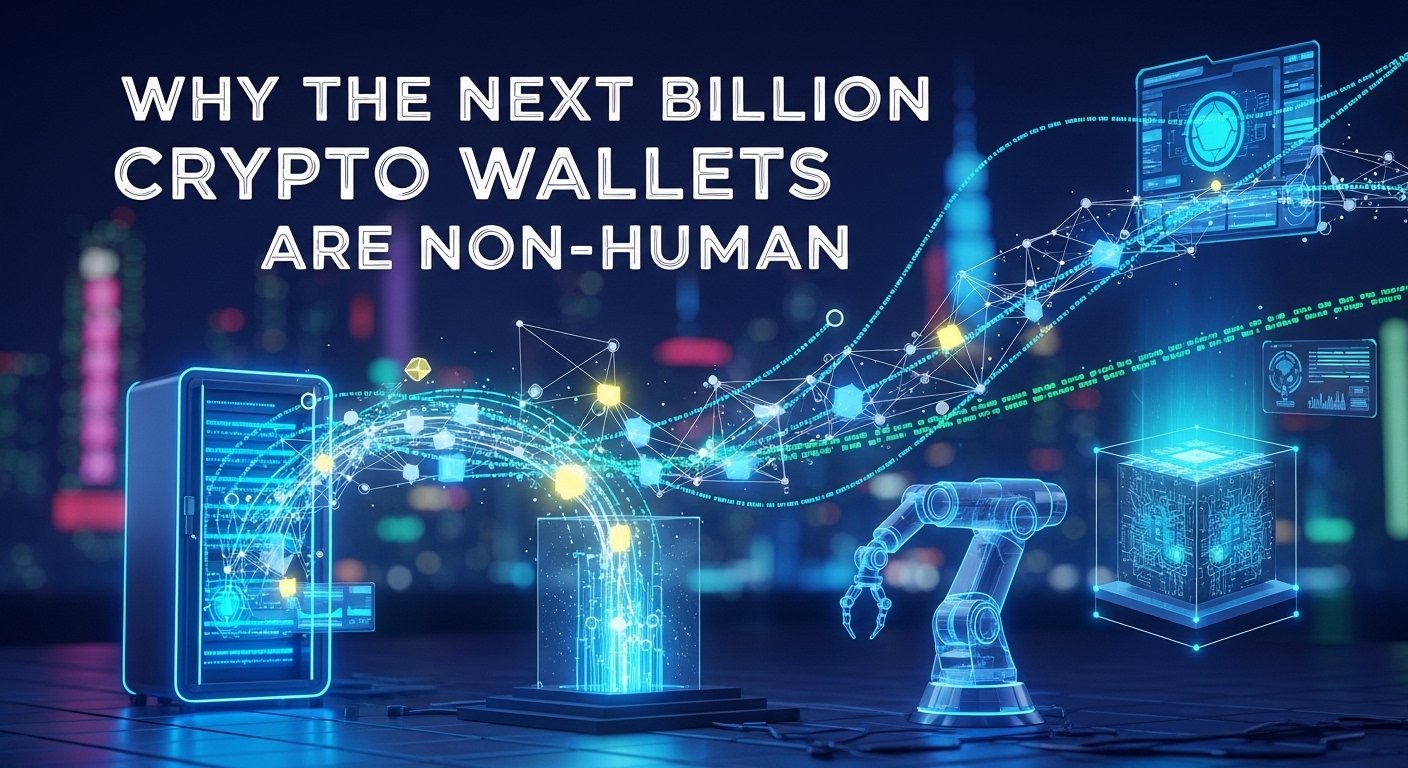
For years, the mental image of a crypto wallet has been simple: a person downloads an app, writes down a seed phrase, buys some tokens, and maybe uses DeFi or NFTs. That picture is already outdated. The next big wave of adoption won’t come from billions of new people suddenly becoming crypto power users. It will come from billions of non-human crypto wallets—AI agents, bots, smart appliances, vehicles, and autonomous services—holding and moving value on behalf of humans, companies, and machines.
When we say “The Next Billion Crypto Wallets Won’t Be Human,” we’re not being dramatic. We’re describing a structural change in how the internet works. In the same way that APIs quietly became the majority of web traffic, autonomous software will quietly become the majority of onchain activity. A wallet will increasingly be a “spending account” for a service, not a personal vault. A crypto wallet will function like an identity, a permissions layer, and a payment rail for agents that buy compute, pay for data, subscribe to services, and settle transactions at machine speed.
This matters because crypto wallet design has mostly been built around human limitations: memory, trust, attention, and fear of losing keys. But bots don’t forget passwords, don’t read warning screens, and don’t hesitate before signing a transaction. Non-human wallets can be safer in some ways—highly constrained, programmatically verified, and policy-controlled—but they can also be far more dangerous if compromised, because they can act at scale and at speed.
So the real question is not whether non-human wallets are coming. They already are. The question is whether the crypto ecosystem—wallet providers, protocols, regulators, and security teams—is ready to support a world where most “users” are machines.
Why the Next Billion Crypto Wallets Are Non-Human
A crypto wallet is simply a mechanism for controlling keys and authorizing transactions. Nothing about that requires a human hand. In fact, once you frame a wallet as a control interface rather than a person’s app, it becomes obvious that software will dominate. The internet has always been a network of programs talking to programs. Payments are one of the last pieces still heavily mediated by humans: clicking checkout buttons, typing card numbers, confirming bank transfers. Crypto removes much of that friction by turning value transfer into a programmable function call.
This is why the next billion crypto wallet instances will likely belong to services. Consider the rise of AI agents that can perform tasks end-to-end: booking travel, ordering inventory, negotiating prices, or coordinating workloads across cloud providers. These agents need a way to pay. They need a wallet that can hold funds, sign transactions, and follow rules. Similarly, consider the explosion of connected devices. Cars already pay tolls. Machines already order replacement parts. Energy devices already trade power in demand response markets. When these systems go onchain, each one becomes a crypto wallet or controls one.
Another force is fragmentation of identity online. Instead of one wallet per person, we’re moving toward many wallets per purpose: a trading wallet, a spending wallet, a gaming wallet, a DAO wallet, a payroll wallet, and—importantly—an agent wallet. The average individual may indirectly control dozens of wallets through apps and agents, even if they never touch a seed phrase. That multiplication alone pushes the wallet count far beyond the human population.
Finally, businesses are incentivized to create autonomous wallets. Subscriptions, pay-per-use APIs, micro-transactions, and machine-to-machine commerce become simpler when settlement is programmable. Once the incentives line up, non-human crypto wallet growth becomes inevitable.
The Rise of AI Agent Wallets and Autonomous Commerce
AI Agents Need Wallets With Policies, Not Prompts
The typical human wallet experience is built around prompts: “Do you approve this transaction?” “Are you sure?” But an AI agent wallet cannot rely on pop-ups. It needs embedded rules: spend limits, allowlists, deny lists, time locks, rate limits, and contextual constraints. In practice, the next generation of crypto wallet infrastructure will look more like enterprise permissioning than consumer UX.
Imagine an agent tasked with running marketing campaigns. It needs to buy ads, purchase datasets, pay creators, and settle invoices. If it’s waiting for a human signature each time, it loses the benefit of autonomy. Instead, the human sets a policy like: “This wallet can spend up to $500/day on verified vendors in these categories; anything above requires approval.” That policy becomes the real UX. Humans define intent; agents execute intent.
This is also where smart contract wallets become central. A contract-based crypto wallet can encode behavior: multi-signature approval, guardianship, session keys, and programmable recovery. It becomes a control plane for automated spending and signing. In an agent world, a wallet isn’t a container; it’s a programmable manager.
Autonomous Micro-Payments Make Machine Wallets Practical
A big reason machines haven’t dominated payments yet is friction. Traditional rails aren’t designed for high-frequency micro-transactions between services. Crypto can be. If an agent needs to buy a tiny piece of data, pay for a few seconds of inference, or stream payments as work is completed, onchain micro-settlement becomes compelling—especially as scaling improves and layer-2 ecosystems reduce costs.
This is where “The Next Billion Crypto Wallets Won’t Be Human” becomes a practical statement, not a philosophical one. Wallets will be created automatically for sessions, tasks, devices, and temporary identities. Many will be ephemeral: created, funded, used, and retired. The number of wallets can explode without implying billions of new humans.
Machine-to-Machine Payments: IoT, Robots, and Smart Infrastructure
Devices as Wallets: Cars, Chargers, and Sensors
When devices can pay each other, entire categories of automation unlock. A car could pay a charger the moment it plugs in, stream payment as energy flows, and stop instantly if pricing changes. A sensor network could sell real-time data feeds to buyers with automatic settlement. An industrial robot could order parts and pay suppliers as soon as delivery is confirmed.
In all these scenarios, each device either has its own crypto wallet or uses a delegated wallet controlled by a fleet manager. In both cases, the wallet count rises sharply because devices outnumber humans. We already live in a world where there are more connected endpoints than people. If a meaningful fraction of those endpoints get wallets, the “next billion” comes quickly.
Tokenization and Automation in Supply Chains
Supply chains are filled with triggers: shipment scanned, temperature exceeded, package delivered, warranty activated. A crypto wallet tied to a machine can settle these events automatically. It can escrow funds, release payments upon verification, or penalize non-compliance in near real time. That turns financial operations into software: deterministic, auditable, and fast.
This does not mean every logistics flow needs a public blockchain. But the wallet model—keys, authorization, programmable settlement—fits machine commerce naturally. Whether on public chains or permissioned networks, non-human wallets become the norm for operational finance.
Wallet UX Will Become Invisible: From Seed Phrases to Embedded Wallets
The End of “Wallet Setup” as a User Journey
Most people do not want to “set up a crypto wallet.” They want the outcome: send money, access a service, own an asset, or authorize an agent. Non-human wallets accelerate the move toward embedded experiences where the wallet is created behind the scenes. Wallet providers already do this with embedded wallets, MPC wallets, and account abstraction patterns that hide complexity.
In a non-human world, the concept of onboarding changes. A service creates a wallet instance when needed, attaches it to a policy, funds it with a controlled allowance, and starts operating. The human may never see keys. The wallet becomes a backend component, like a database credential.
This is why the crypto wallet market will look different. Winning won’t just mean having the slickest app. It will mean offering infrastructure for automated wallet creation, key management, policy frameworks, and monitoring systems that businesses can trust.
LSI Terms That Signal the Shift
The language is changing in a way that mirrors the architecture shift. Phrases like “account abstraction,” “smart contract wallet,” “MPC key management,” “session keys,” and “embedded wallet” are becoming more common because they fit the needs of non-human users. These aren’t just buzzwords; they’re the toolkit for building wallets that can operate at scale without constant human interaction.
Security in a World of Non-Human Crypto Wallets
New Threat Models: Scale, Speed, and Automation
If a human wallet is hacked, damage is often limited by human constraints: the attacker has to move funds across bridges, off-ramps, or mixers, and defenders may catch it. But if an attacker compromises a fleet of non-human crypto wallets, the damage can be catastrophic. Automated wallets can drain accounts in seconds, rebalance across chains, and route through complex paths before a human even notices.
Security has to evolve from “protect the seed phrase” to “protect the system.” That means continuous monitoring, anomaly detection, transaction simulations, and policy enforcement. It also means using constrained permissions: the agent wallet should never hold more funds than needed, and it should never have unlimited signing authority.
Programmable Safety: Limits, Allow Lists, and Recovery
The good news is that smart crypto wallet design can make non-human wallets safer than human wallets. A properly built wallet can enforce spending caps, restrict interactions to verified contracts, and require multi-party approval for high-risk actions. It can also implement automated recovery methods: if suspicious behavior is detected, the wallet can freeze itself, rotate keys, or notify guardians. This is where smart contract wallets and account abstraction matter. Instead of a single private key controlling everything, you can build layered permissions and fallback routes. For non-human wallets, that structure is essential.
Verification and Trust for Agents
If you’re letting an agent spend money, you need to trust that it is executing your intent. That raises questions: How do you verify the agent’s code? How do you confirm it’s using correct data? How do you prevent prompt injection or malicious tool usage from manipulating wallet actions?
In practice, wallets for agents will need a combination of approaches: restricted tool access, audited execution environments, signed policies, and onchain verification of counterparties. The crypto wallet becomes a gatekeeper that forces the agent to operate within guardrails.
Regulation and Compliance: Who’s Responsible When a Bot Pays?
Liability in Autonomous Transactions
A core challenge of “The Next Billion Crypto Wallets Won’t Be Human” is accountability. If an autonomous wallet buys something illegal, violates sanctions, or participates in fraud, who is responsible? The developer? The owner? The platform? Traditional compliance frameworks assume a human initiator. Non-human wallets blur that line.
We’re likely to see compliance evolve toward policy-based controls and provenance. Businesses will want clear logs of who set the rules, what the agent was allowed to do, and how it made decisions. The wallet layer is well-positioned to provide this because it sits at the point of authorization.
Identity, Attestations, and Selective Disclosure
Non-human wallets also increase the importance of digital identity and verification. Not every transaction should require full identity exposure, but some transactions will require proof of legitimacy. This is where attestations, verifiable credentials, and selective disclosure systems can matter. A crypto wallet might prove it belongs to a regulated entity without revealing unnecessary personal data. In other words, wallets won’t just store value. They’ll store trust signals, permissions, and claims about who—or what—is behind the keys.
The Business Opportunity: Wallet Infrastructure for the Agent Economy
Wallets as a Platform Layer
If non-human wallets dominate, then wallet infrastructure becomes a platform business. Companies will need tooling for provisioning wallets at scale, managing permissions, funding accounts, tracking spend, and reconciling transactions. That looks like DevOps for finance: dashboards, alerts, audit trails, and policy templates.
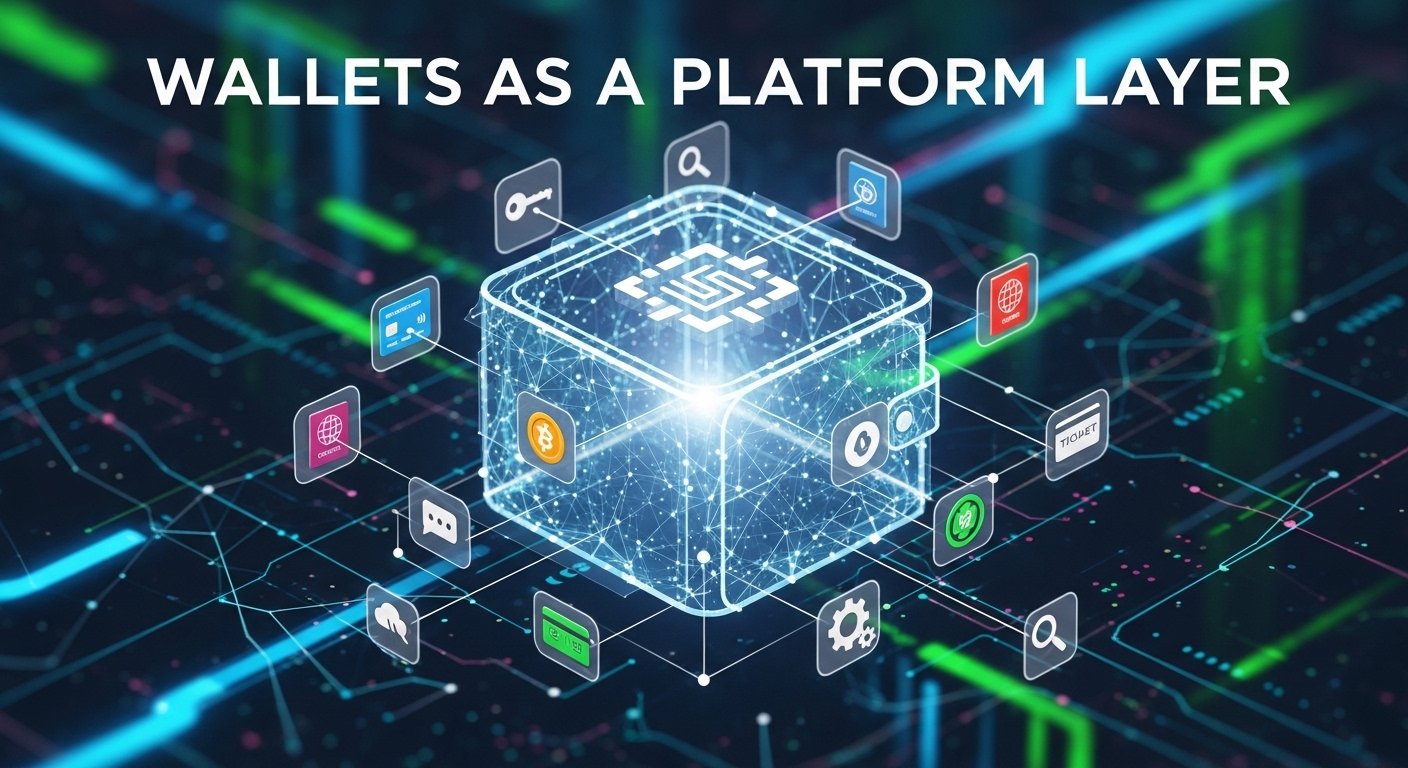
We may see “wallet operations” become a job title. Teams will manage fleets of wallets the way they manage fleets of servers. The biggest providers will offer crypto wallet orchestration, lifecycle management, and deep integrations with agent frameworks.
Payments, Data, and Compute as Onchain Services
As agents pay for services, new markets emerge: data marketplaces, compute marketplaces, and specialized APIs that settle onchain. A wallet becomes a passport to these services. The act of paying becomes an automated handshake between programs.
This changes what adoption means. The success metric won’t be “monthly active users” in the human sense. It will be “monthly active wallets” and “transactional throughput” driven by machine commerce. In that context, “The Next Billion Crypto Wallets Won’t Be Human” is also a prediction about where revenue and usage will concentrate.
How to Prepare: What Builders and Users Should Expect
For Builders: Design for Constraints and Observability
If you’re building wallet infrastructure, the priority shifts from pretty interfaces to robust control systems. You need to assume your crypto wallet will be called by scripts, agents, and services. That means strong APIs, reliable key management, transaction simulation, and clear failure modes. It also means observability: logs, metrics, and real-time anomaly detection. Builders should treat every agent wallet like an enterprise wallet. Assume it can be attacked, abused, or misconfigured. The goal is not to eliminate risk; it’s to make risk manageable.
For Users: You’ll “Own” Wallets You Never See
Most people will interact with non-human wallets indirectly. Your AI assistant may have a wallet. Your smart home may have a wallet. Your apps may spin up task wallets. You won’t memorize seed phrases for all of them. Instead, you’ll rely on account systems, recovery methods, and policy dashboards. That can be good—far fewer catastrophic losses from forgotten phrases—but it also means you’ll place more trust in wallet providers and platforms. Understanding what your wallets are allowed to do will matter as much as understanding what they contain.
Conclusion
The internet is becoming more autonomous. Software is taking on tasks once performed manually, and value transfer is the missing ingredient for full autonomy. That’s why the next billion crypto wallets won’t be human. They’ll belong to AI agents, services, devices, and autonomous systems that need to pay, receive, and enforce rules at machine speed.
This shift will reshape everything: wallet UX will become invisible, security will become policy-driven, and compliance will focus on guardrails and accountability rather than click-through confirmations. The winners in the crypto wallet race will be the builders who treat wallets as programmable infrastructure, not just consumer apps. If crypto’s first era was about humans learning to use wallets, the next era is about wallets learning to serve humans—quietly, safely, and automatically.
FAQs
Q: What does it mean that the next billion crypto wallets won’t be human?
It means most new crypto wallet instances will be created for AI agents, bots, apps, and devices that transact autonomously, rather than for individual people.
Q: Are AI agent wallets safe to use?
They can be safer than human wallets if they use smart contract wallet controls like spending limits, allowlists, and multi-approval rules, but they also introduce new risks at scale.
Q: Will people still need seed phrases in the future?
Many users won’t. With embedded wallets, MPC, and account abstraction approaches, wallet access and recovery can be handled through safer, more user-friendly systems.
Q: How will regulation work if a bot makes a transaction?
Regulation will likely emphasize accountability and policy controls—who configured the agent, what permissions it had, and whether safeguards and verification were in place for the crypto wallet.
Q: What should builders focus on for non-human crypto wallets?
Builders should prioritize programmable permissions, transaction simulation, monitoring, secure key management, and clear wallet lifecycle tooling to support autonomous and high-volume usage.
