

Morgan Stanley seeks crypto talent at a time when traditional finance is steadily moving beyond experimentation and into real blockchain implementation. The decision to recruit professionals focused on DeFi infrastructure and tokenization frameworks reflects a broader transformation taking place across global capital markets. For years, digital assets were viewed largely through the lens of volatility and speculative trading. Today, however, major institutions are increasingly focused on blockchain’s structural advantages—automation, transparency, programmable settlement, and efficiency.
When Morgan Stanley seeks crypto talent to build DeFi and tokenization infrastructure, it is not chasing hype. Instead, it is positioning itself to participate in what many industry leaders believe is the next evolution of financial market architecture. Tokenization is rapidly emerging as a powerful tool for modernizing asset issuance, settlement systems, collateral management, and cross-border transactions. Meanwhile, decentralized finance concepts—adapted for institutional use—are being explored as a way to reduce friction and streamline operations. This hiring push highlights a strategic shift: Wall Street firms are no longer asking whether blockchain belongs in institutional finance. They are asking how to build it securely, compliantly, and at scale.
Why Morgan Stanley Seeks Crypto Talent Now
Morgan Stanley seeks crypto talent at a pivotal moment for digital asset integration. The global financial system is under pressure to modernize. Settlement cycles remain slow by technological standards, cross-border transfers can be inefficient, and reconciliation processes consume enormous operational resources.
Blockchain technology offers potential solutions. Through distributed ledger technology (DLT), financial institutions can create tamper-resistant transaction records, automate compliance checks, and enable near-instant asset transfers. Tokenization allows real-world assets to be represented digitally, making them easier to trade, fractionalize, and settle.
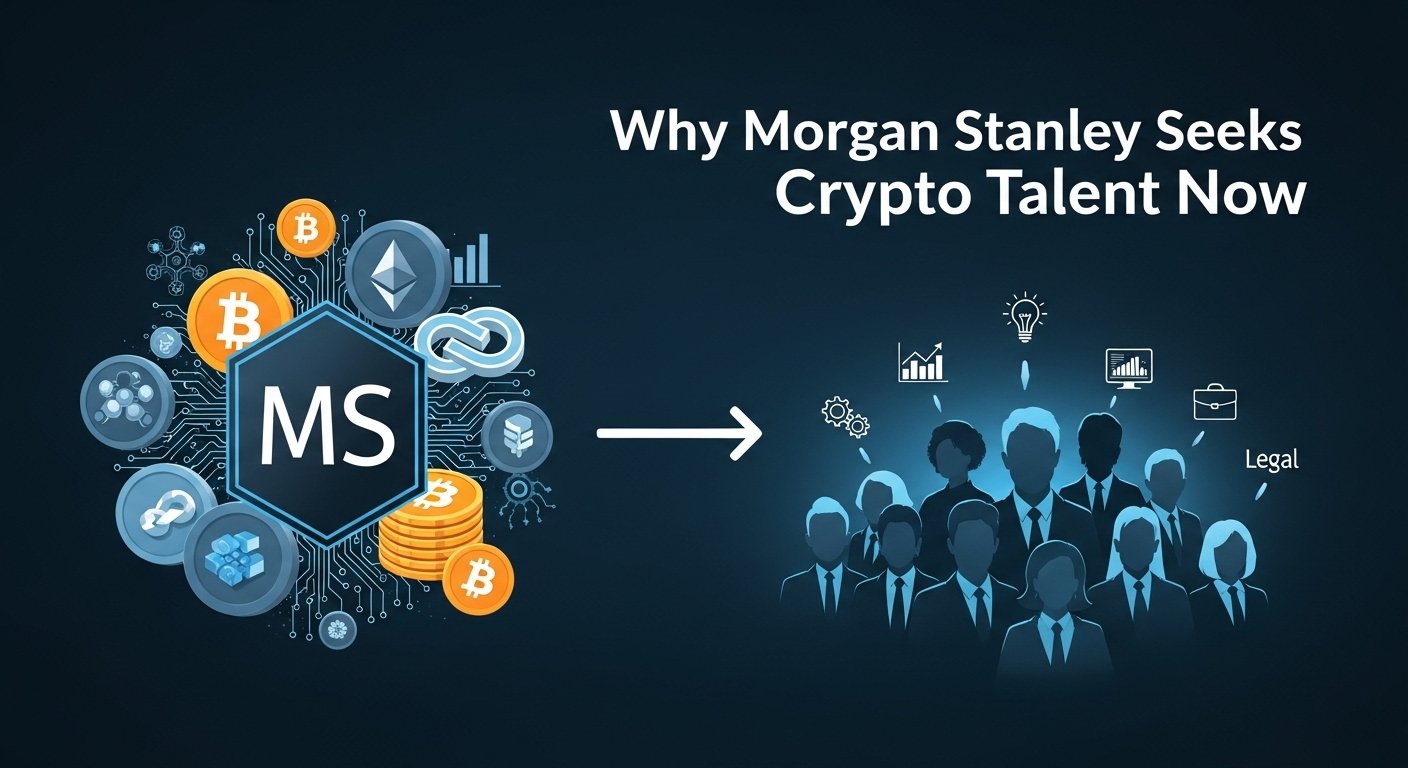
The timing is also influenced by regulatory progress. As regulators around the world clarify frameworks for digital assets, banks feel more comfortable building infrastructure. Institutional adoption tends to accelerate when compliance pathways become clearer. Morgan Stanley’s decision to expand crypto-focused hiring suggests it sees sufficient regulatory momentum to justify long-term investment.
Additionally, competitive pressure plays a role. Other major banks and asset managers are exploring tokenized funds, blockchain settlement pilots, and stablecoin integrations. In this environment, standing still may carry greater risk than innovating carefully.
DeFi in an Institutional Context
When Morgan Stanley seeks crypto talent for DeFi initiatives, it does not necessarily mean replicating public, permissionless DeFi platforms. Institutional DeFi differs significantly from retail decentralized finance ecosystems. Public DeFi typically emphasizes open participation, pseudonymity, and fully decentralized governance. Institutional DeFi, on the other hand, integrates core DeFi principles—automation, programmability, and composability—within a regulated framework.
Smart Contracts as Compliance Tools
In traditional DeFi, smart contracts automate lending, trading, and liquidity provision. Within a bank, smart contracts can also serve as compliance engines. Rules governing asset transfers, investor eligibility, and transaction limits can be coded directly into blockchain-based systems. By embedding policy into code, institutions can reduce manual intervention and human error while maintaining strict oversight. This approach transforms compliance from a reactive process into a proactive, automated safeguard.
Permissioned DeFi and Controlled Access
Institutional DeFi infrastructure often relies on permissioned networks or hybrid blockchain models. Participants may need to meet identity verification standards, pass KYC checks, and comply with anti-money laundering regulations before interacting with tokenized assets. Morgan Stanley seeks crypto talent capable of designing such secure and compliant environments. This requires a deep understanding of both blockchain mechanics and financial regulatory requirements.
Tokenization Infrastructure: The Real Game Changer
While crypto trading garners headlines, tokenization infrastructure represents a deeper structural opportunity. Tokenization refers to the process of representing ownership rights in an asset—such as equities, bonds, funds, or real estate—as blockchain-based tokens. When Morgan Stanley seeks crypto talent to build tokenization infrastructure, it signals an interest in modernizing the core systems that underpin financial markets.
Faster Settlement and Reduced Counterparty Risk
Traditional settlement processes often take multiple days. During that time, counterparties face credit exposure. Blockchain-based settlement systems can reduce settlement windows significantly, potentially lowering risk and capital requirements. By leveraging programmable settlement mechanisms, tokenized assets can enable near-instant delivery-versus-payment transactions. This efficiency could unlock liquidity and improve capital utilization across markets.
Fractionalization and Accessibility
Tokenization also enables fractional ownership. High-value assets can be divided into smaller units, potentially broadening access to investment opportunities. While regulatory and operational considerations remain, the underlying infrastructure creates new possibilities for market participation.
Operational Efficiency
Back-office processes—reconciliation, reporting, clearing—can be streamlined through blockchain’s shared ledger system. Instead of multiple institutions maintaining separate records, a unified distributed ledger can provide a single source of truth. Morgan Stanley seeks crypto talent capable of designing systems that integrate tokenized assets with existing banking operations, including custody, accounting, and risk management.
Role of Stablecoins and Digital Cash
Stablecoins play an important role in tokenized ecosystems. In any financial transaction, there must be an asset leg and a payment leg. Stablecoins or tokenized cash equivalents can serve as the settlement currency within blockchain environments. If Morgan Stanley builds DeFi and tokenization infrastructure, integrating digital cash mechanisms will likely be part of the architecture.
Stablecoins provide price stability compared to volatile cryptocurrencies, making them more suitable for institutional use. Beyond stablecoins, banks may explore tokenized deposits or blockchain-based representations of traditional fiat balances. These innovations could modernize treasury operations and cross-border payment flows.
Skills Morgan Stanley Is Likely Targeting
When Morgan Stanley seeks crypto talent, the hiring focus likely extends beyond basic blockchain familiarity. Institutional blockchain development demands specialized expertise.
Blockchain Architecture and Systems Design
Architects must understand consensus mechanisms, network security, cryptographic principles, and interoperability standards. They must design systems capable of handling high transaction volumes while maintaining resilience and data integrity.
Smart Contract Development
Smart contract engineers need proficiency in languages such as Solidity and experience with formal verification techniques. Institutional-grade smart contracts require rigorous testing to prevent vulnerabilities.
Cybersecurity and Risk Management
Security is paramount in financial systems. Crypto professionals working within banks must implement advanced key management systems, multi-signature protocols, and incident response frameworks.
Regulatory Integration
Developers must collaborate closely with legal and compliance teams to ensure systems align with evolving digital asset regulations. Embedding regulatory logic directly into code is becoming a defining feature of institutional blockchain platforms.
Multi-Chain and Interoperability Considerations
The blockchain ecosystem is not limited to a single network. Public chains like Ethereum coexist with permissioned enterprise platforms. If Morgan Stanley seeks crypto talent to build comprehensive infrastructure, interoperability will be critical. Multi-chain capabilities allow institutions to interact with different ecosystems depending on use cases.
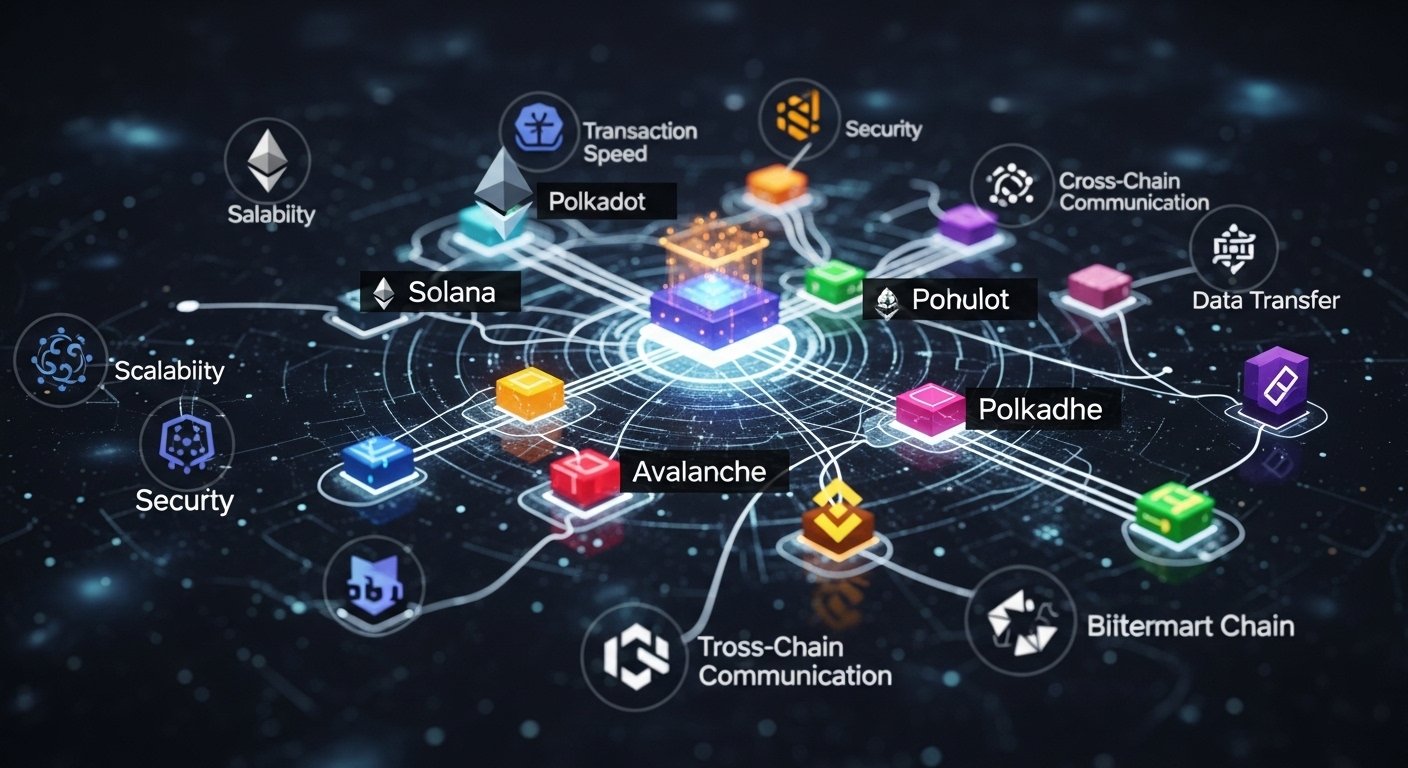
For example, a permissioned network may handle sensitive financial data, while a public blockchain may offer liquidity advantages. Designing bridges and cross-chain communication systems requires careful security planning. Past incidents in decentralized finance have highlighted the risks associated with poorly secured interoperability protocols.
Strategic Implications for Wall Street
Morgan Stanley seeks crypto talent not merely to participate in digital assets but to help shape the future of financial infrastructure. If major banks succeed in implementing tokenization at scale, the impact could be transformative.
Evolution of Capital Markets
Tokenized securities could change how equities, bonds, and alternative assets are issued and traded. Automated compliance and real-time settlement may reduce friction across markets.
Competitive Differentiation
Early adopters of tokenization infrastructure may gain operational efficiencies and attract forward-thinking institutional clients. Offering blockchain-enabled products could become a differentiator in asset management and investment banking.
Regulatory Leadership
By engaging proactively with regulators and building compliant systems, large banks can influence policy development. Institutions that demonstrate responsible innovation may help define industry standards.
Challenges and Risks
Despite optimism, significant challenges remain. Regulatory uncertainty persists in some jurisdictions. Technology integration with legacy systems can be complex and costly. Cybersecurity threats continue to evolve. Morgan Stanley seeks crypto talent precisely because navigating these challenges requires expertise. Institutional blockchain initiatives must balance innovation with prudence.
Additionally, market volatility in digital assets can affect public perception. While tokenization infrastructure is distinct from speculative trading, headlines often conflate the two. Clear communication will be essential to maintain stakeholder confidence.
Long-Term Vision of Programmable Finance
At its core, the push for DeFi and tokenization infrastructure represents a shift toward programmable finance. In a programmable system, assets and money move according to predefined rules encoded in software. Compliance checks occur automatically. Settlements finalize quickly. Transparency improves across counterparties.
Morgan Stanley seeks crypto talent to help design this future. Rather than replacing traditional finance, blockchain infrastructure may enhance it—making systems faster, more transparent, and more resilient. The transformation will likely occur gradually. Pilot programs, limited-scope deployments, and internal testing will precede large-scale adoption. But each hiring decision signals progress toward broader implementation.
Conclusion
Morgan Stanley seeks crypto talent to build DeFi and tokenization infrastructure because the financial industry is entering a new phase of digital transformation. Tokenization promises to modernize settlement systems, improve liquidity management, and reduce operational inefficiencies. Institutional DeFi concepts bring automation and programmability into a regulated framework.
This strategic hiring push reflects confidence that blockchain technology has matured beyond experimentation. By investing in talent capable of designing secure, compliant, and scalable systems, Morgan Stanley positions itself at the forefront of next-generation financial infrastructure. If successful, these efforts could accelerate the integration of blockchain into mainstream capital markets—reshaping how assets are issued, traded, and settled for decades to come.
FAQs
Q: Why does Morgan Stanley seek crypto talent now?
Morgan Stanley seeks crypto talent because blockchain technology has reached a stage where institutional integration is viable. Regulatory clarity and competitive pressure are accelerating adoption.
Q: What is tokenization infrastructure?
Tokenization infrastructure refers to systems that represent real-world assets as blockchain-based tokens, enabling faster settlement, improved transparency, and automated compliance.
Q: Is institutional DeFi the same as public DeFi?
No. Institutional DeFi operates within regulatory frameworks and typically involves permissioned networks, identity verification, and compliance safeguards.
Q: How could tokenization affect capital markets?
Tokenization may reduce settlement times, lower counterparty risk, and streamline back-office processes, potentially making markets more efficient.
Q: What skills are needed for building DeFi infrastructure?
Key skills include blockchain architecture, smart contract development, cybersecurity expertise, interoperability design, and regulatory integration knowledge.
See More: Best DeFi Tokens 2026- Top DeFi Coins to Buy, Stake, and Hold for the Next Bull Cycle
